
Moroccan Mint Tea
Discover Moroccan mint tea, its cultural meaning, traditional ingredients, serving etiquette and a simple recipe to prepare it at home.
Moroccan mint tea is much more than a refreshing drink. Across Morocco, it represents hospitality, generosity, friendship and the pleasure of sharing time with others. Whether you visit a family home, a traditional riad, a desert camp or a small shop in the Medina, you may be welcomed with a glass of hot mint tea.
The drink is usually prepared with green tea, fresh mint leaves, hot water and sugar. However, its importance goes far beyond its simple ingredients. The preparation, presentation and serving of the tea form part of a social tradition that brings people together.
For travelers, tasting Moroccan mint tea is one of the easiest ways to experience an important part of local culture. This guide explains what Moroccan tea is, how it is traditionally prepared, how it is served and how you can make it at home.
What Is Moroccan Mint Tea?
Moroccan mint tea is a hot drink generally prepared with green tea, fresh spearmint, boiling water and sugar. It is often called “atay” in Morocco.
The green tea provides a slightly bitter and aromatic base, while the mint adds freshness. Sugar balances the flavors and gives the drink its characteristic sweetness.
Although mint tea is associated closely with Morocco, recipes can vary between families, cities and seasons. Some people prefer a very sweet tea, while others use less sugar. The amount of mint can also change depending on availability and personal preference.
The final drink should be fragrant, fresh and balanced. It is normally served hot, even during warm weather.
Why Tea Is Important in Moroccan Culture
Tea plays an important role in everyday Moroccan life. It is commonly served when welcoming visitors, during family gatherings, after meals, during business conversations and while relaxing with friends.
Offering tea is a sign of hospitality. A host may prepare it carefully in front of guests or bring it already prepared on a decorated tray. Refusing tea is not necessarily considered offensive, but accepting at least a small glass is often seen as a friendly gesture.
Tea also creates a moment to slow down. Its preparation encourages conversation and gives people time to connect. In a busy market, a shopkeeper may offer tea before discussing a purchase. In a family home, several glasses may be served while people talk.
For this reason, Moroccan tea should not be understood only as a beverage. It is also part of a social experience.
The Main Ingredients
Green Tea
The traditional base is usually a strong green tea. A small quantity is enough because the flavor becomes more intense during preparation.
The green tea gives the drink its structure and slight bitterness. This bitterness is balanced by the mint and sugar.
Fresh Mint
Fresh spearmint is commonly used because of its bright and refreshing aroma. Large bunches may be added directly to the teapot.
The mint should be fresh, clean and fragrant. Damaged or dry leaves will produce a weaker flavor.
Sugar
Traditional Moroccan tea can be quite sweet. Sugar may be added directly to the teapot rather than separately to each glass.
The quantity depends on personal taste. Travelers who prefer less sweetness can request tea with little sugar or without sugar, although the result will differ from the traditional version.
Water
Fresh boiling water is essential. The temperature helps release the flavor of the green tea and mint.
The water should be heated separately before being poured into the teapot.
Traditional Equipment
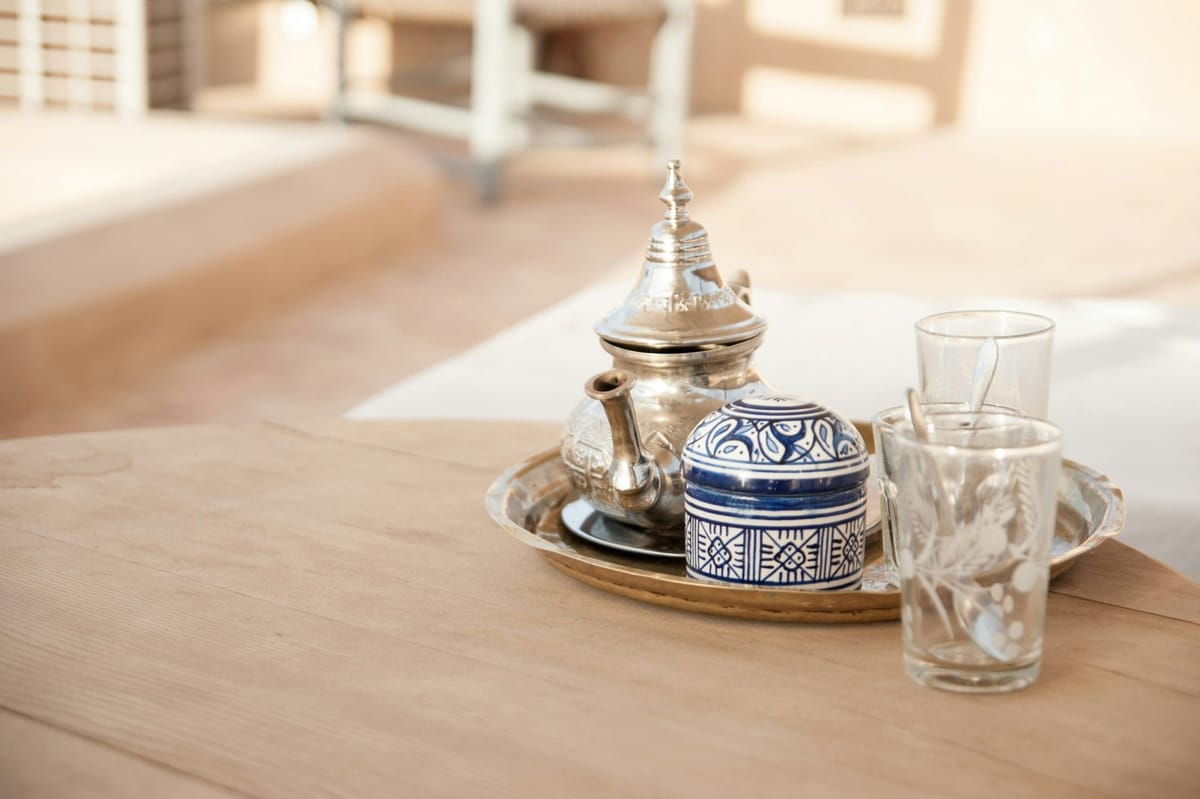
Moroccan tea is traditionally prepared in a metal teapot. These teapots are often decorated and designed to pour easily from a height.
The tea is usually served on a tray with small glasses. Moroccan tea glasses may be plain or decorated with colorful patterns.
You do not need traditional equipment to prepare the drink at home. A regular heat-resistant teapot and small glasses can also work. However, using a Moroccan teapot and glasses can make the experience feel more authentic.
Why Is Moroccan Tea Poured From a Height?
One of the most recognizable parts of Moroccan tea service is the high pour. The person serving the tea raises the teapot above the glass and pours in a controlled stream.
This technique helps mix the tea and can create a light layer of foam on the surface. It also turns the serving process into a visual ritual.
Pouring from a height requires practice. Beginners should start close to the glass and gradually increase the distance. It is better to pour safely than to spill hot tea while attempting to imitate an experienced server.
Moroccan Tea Serving Etiquette
Tea is commonly served in small glasses rather than large cups. Guests may receive several servings during a visit.
The host often pours the tea, and the glasses are placed on a tray. When receiving a glass, a simple expression of thanks is appropriate.
Tea may be accompanied by Moroccan pastries, bread, nuts, dried fruit or other small snacks. During special occasions, the presentation may be more elaborate.
There is no need for travelers to understand every custom perfectly. Showing appreciation, drinking slowly and respecting the host’s effort are usually enough.
When Is Mint Tea Served?
Moroccan mint tea can be served throughout the day.
It may be offered during breakfast, after lunch, during the afternoon, after dinner or whenever guests arrive. It is also common during celebrations, business meetings and family visits.
In traditional markets, shop owners may offer tea while discussing products. Accepting tea does not automatically require you to buy something, but you should remain polite and respectful.
In desert camps and rural areas, tea may be prepared slowly over heat, creating a peaceful experience that becomes part of the journey.
Regional and Seasonal Variations
The exact preparation can change across Morocco. Mint availability, local habits and family preferences all influence the recipe.
During warmer months, fresh mint may be used generously. In colder seasons, other aromatic herbs can sometimes be added or used as an alternative.
Some variations include herbs with stronger or more warming aromas. The quantity of sugar also differs from one household to another.
These differences are part of the tradition. There is no single recipe followed identically by everyone.
Common Mistakes When Making Moroccan Tea
Using Too Much Green Tea
A large amount of green tea can make the drink extremely bitter. Begin with a small quantity and adjust gradually.
Using Old Mint
Mint that is dry, damaged or no longer fresh will not provide the same aroma. Choose bright, fragrant leaves.
Crushing the Mint Excessively
Roughly crushing the mint can release unwanted bitterness. Handle the leaves gently.
Forgetting to Mix the Sugar
Sugar added directly to the pot must be mixed properly. Pouring tea into a glass and returning it to the pot is an effective traditional method.
Does Moroccan Mint Tea Contain Caffeine?
Because Moroccan mint tea is usually prepared with green tea, it generally contains caffeine.
The exact amount depends on the quantity of tea leaves, the infusion time and the number of servings consumed.
Travelers who avoid caffeine can ask whether an herbal infusion without green tea is available. However, this will not be the same as traditional Moroccan mint tea.
Where to Try Moroccan Mint Tea in Marrakech
You can find mint tea throughout Marrakech. Traditional restaurants, cafés, riads and hotels commonly serve it.
Rooftop cafés overlooking the Medina are popular places to enjoy tea while watching daily life below. Riads often serve it in peaceful courtyards, while desert excursions may include tea as part of the welcome.
For a more personal experience, a cooking class or food tour can explain the ingredients and preparation process in greater detail.
Wherever you drink it, pay attention not only to the flavor but also to the presentation, glasses, tray and way the tea is poured.
Where to Try Moroccan Mint Tea in Marrakech
You can find mint tea throughout Marrakech. Traditional restaurants, cafés, riads and hotels commonly serve it.
Rooftop cafés overlooking the Medina are popular places to enjoy tea while watching daily life below. Riads often serve it in peaceful courtyards, while desert excursions may include tea as part of the welcome.
For a more personal experience, a cooking class or food tour can explain the ingredients and preparation process in greater detail.
Wherever you drink it, pay attention not only to the flavor but also to the presentation, glasses, tray and way the tea is poured.
oroccan Tea and Hospitality
The most important ingredient in Moroccan tea may be the hospitality surrounding it.
The tea creates a reason to sit together, welcome a visitor and begin a conversation. Its preparation may be slow, but that is part of its value.
For travelers, accepting a glass of tea can open the door to a meaningful cultural exchange. Even when language is limited, sharing tea creates a simple moment of connection.
This is why the tradition remains memorable long after the glass is empty.
Frequently Asked Questions
What type of mint is used in Moroccan tea?
Fresh spearmint is commonly used because it provides a clean and refreshing aroma.
Can I make Moroccan tea without a traditional teapot?
Yes. A regular heat-resistant teapot can be used, although a Moroccan metal teapot makes pouring and presentation more traditional.
Can I make Moroccan tea without a traditional teapot?
Yes. A regular heat-resistant teapot can be used, although a Moroccan metal teapot makes pouring and presentation more traditional.
Is Moroccan mint tea served hot or cold?
It is traditionally served hot, including during warm weather.
Can I use dried mint?
Dried mint can be used when fresh mint is unavailable, but the aroma and taste will be different.
Final Thoughts
Moroccan mint tea combines simple ingredients with a rich social tradition. Green tea, fresh mint, sugar and hot water become a symbol of hospitality when prepared and shared with care.
During a visit to Marrakech or another Moroccan destination, take time to enjoy the full experience. Notice the decorated glasses, the fragrant mint, the high pour and the conversations that happen around the tray.
You can also recreate the tradition at home by following the preparation steps in this guide. The recipe may be simple, but its real meaning comes from sharing it with others.
Related topics